Southwest Hydropower Output Hits Record Summer Lows Amid Basin Drought
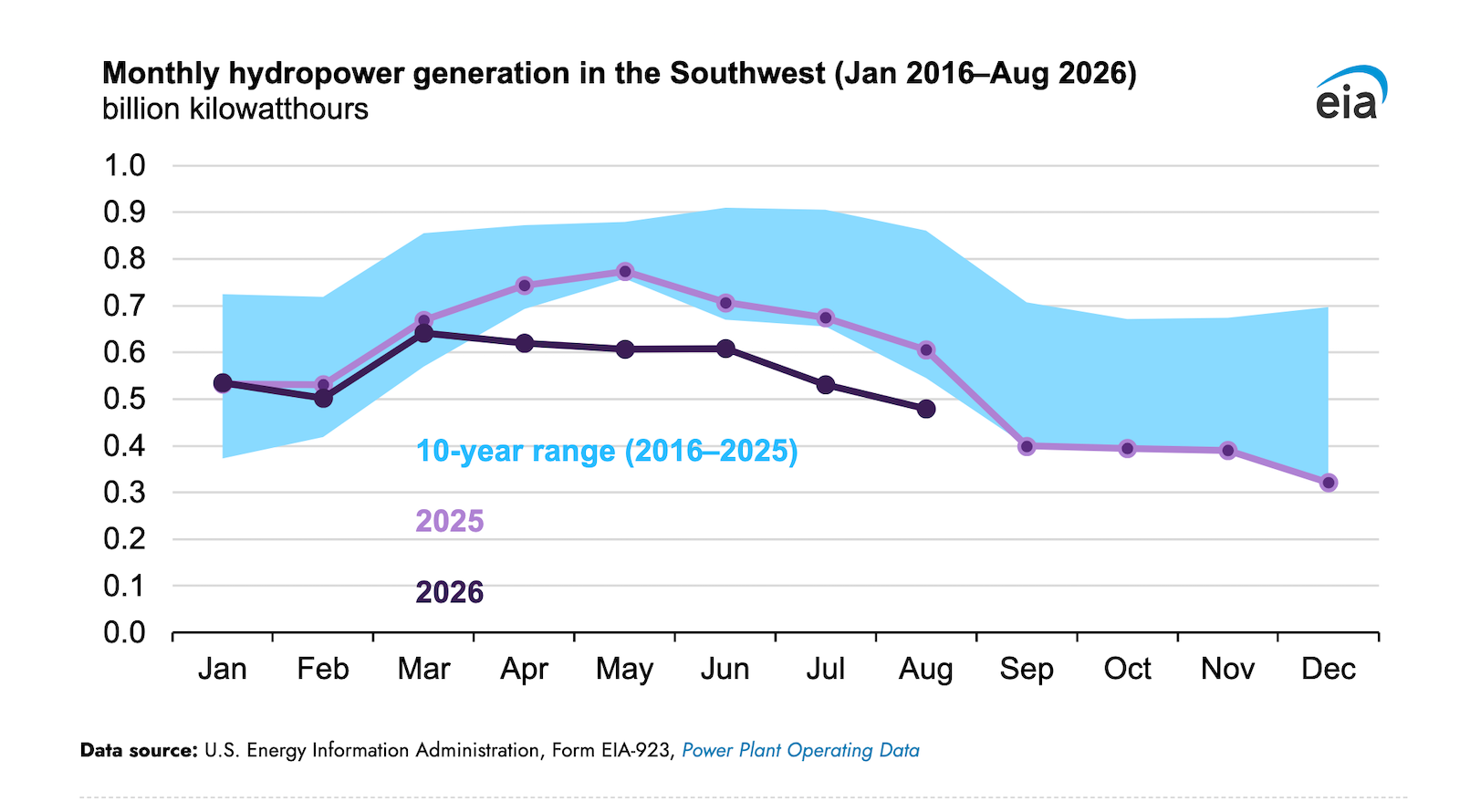
Prolonged Colorado River Basin drought drove Southwestern hydroelectric output down 19 percent from April to August 2026, straining regional grid reliability.
EXECUTIVE BRIEF // KEY TAKEAWAYS
Prolonged Colorado River Basin drought drove Southwestern hydroelectric output down 19 percent from April to August 2026, straining regional grid reliability.
Prolonged drought conditions across the Colorado River Basin pushed hydroelectric power generation in the Southwestern United States to record lows during the summer of 2026, according to data reported by CleanTechnica. Across the Southwestern electricity supply region, which encompasses Arizona, New Mexico, and portions of Nevada and California, total hydropower output between April and August 2026 fell 19 percent compared with the same five-month period a year earlier. The steep decline highlights the escalating vulnerability of water-dependent power generation assets during peak summer cooling demand across the arid American West.
For regional grid operators, utilities, and industrial power consumers, the sharp contraction in hydroelectric dispatch underscores a structural shift in Western electricity markets. Hydropower has historically served as a flexible, zero-emissions baseload and peaking resource capable of balancing intermittent solar and wind generation. As water levels across the Colorado River system remain constrained, power providers must increasingly rely on alternative generation sources, battery energy storage systems, and interregional power imports to maintain grid stability and prevent supply shortfalls during extreme heat events.
Hydrological Pressures Across the Colorado River Basin
The Southwestern electricity supply region relies heavily on major hydroelectric facilities situated along the Colorado River corridor to meet seasonal demand surges. When snowpack runoff and precipitation across the basin fall below historical averages, reservoir elevations drop, directly reducing both the volume of water released through dam turbines and the hydraulic head pressure required for maximum generation efficiency. CleanTechnica noted that the sustained multi-year dryness affecting the Colorado River Basin was the primary driver behind the record-low summer output recorded between April and August 2026.
Unlike thermal power plants that can secure fuel supplies through commercial contracting, hydroelectric facilities are strictly bound by hydrological availability and federal water management mandates. Water releases throughout the Colorado River Basin are governed primarily by municipal, agricultural, and environmental allocation agreements rather than electricity market price signals. Consequently, when drought conditions restrict downstream water deliveries, power generation capacity contracts regardless of wholesale electricity demand across Arizona, New Mexico, Nevada, and California.
Operational and Grid Reliability Implications
A 19 percent year-over-year reduction in April-through-August hydroelectric generation represents a significant operational challenge for balancing authorities in the Desert Southwest. The April-to-August window coincides with the region's most intensive air-conditioning load, a period when wholesale power prices typically spike and reserve margins narrow. Losing nearly one-fifth of seasonal hydro output forces utilities to dispatch higher-marginal-cost natural gas peaking units or procure supplemental capacity from neighboring balancing authorities across the Western Interconnection.
Furthermore, the erosion of reliable hydro capacity complicates the clean energy transition for commercial and industrial enterprises operating data centers, semiconductor fabrication plants, and manufacturing facilities across Arizona and New Mexico. Corporate power purchasers that depend on regional grid mixes to meet carbon-reduction targets face increased exposure to fossil-fueled backup generation when hydroelectric output falters. At the same time, reduced turbine throughput diminishes crucial ancillary services, such as frequency regulation and spinning reserves, that hydro dams traditionally provide to stabilize high-penetration solar grids during evening ramp periods.
Strategic Outlook for Western Power Markets
Looking ahead, the record-low hydropower performance of summer 2026 reinforces the urgency of diversifying grid-firming resources across the American Southwest. Utility resource planners and energy regulators in Arizona, New Mexico, Nevada, and California face mounting pressure to accelerate the deployment of long-duration energy storage, grid-enhancing transmission technologies, and demand-response programs that can substitute for lost hydroelectric flexibility without increasing greenhouse gas emissions.
Until hydrological conditions across the Colorado River Basin experience a sustained recovery, grid operators and energy market participants must treat reduced hydropower availability as a baseline planning assumption rather than a temporary anomaly. Capital allocation across the Southwestern power sector is expected to increasingly favor drought-resilient renewable generation paired with utility-scale battery storage, ensuring that regional electricity supplies remain insulated from the intensifying climate volatility affecting Western water resources.