Jensen Huang Departure Shakes AI Startup Venture Funding Landscape
Founders and venture capitalists anticipate smaller investment checks and compressed valuations as Nvidia transitions from Jensen Huang's leadership.
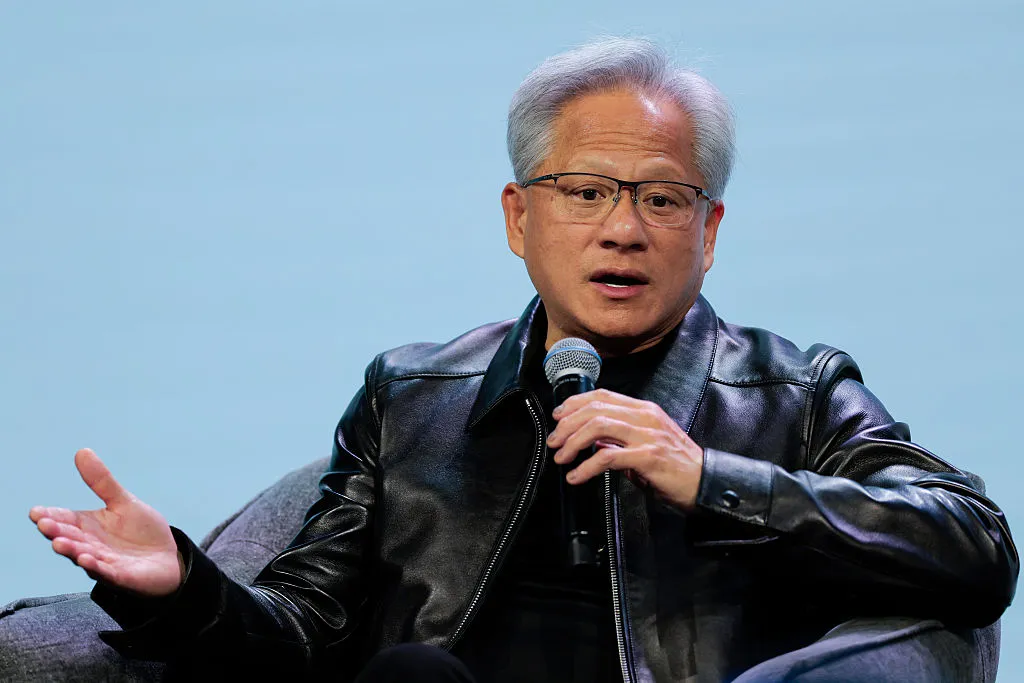
The departure of Jensen Huang from the helm of Nvidia has created an immediate funding vacuum across the artificial intelligence startup ecosystem, according to venture capitalists and company founders cited by TechCrunch. Under Huang's leadership, the semiconductor giant deployed tens of billions of dollars into emerging AI companies, serving as both a premier strategic backer and a primary supplier of computing infrastructure. With Huang stepping away from the chief executive role, early-stage and growth-stage founders are bracing for smaller capital allocations and downward pressure on private market valuations.
The leadership transition carries significant implications for global technology capital markets and enterprise software development. For the past several years, Nvidia functioned not merely as a hardware vendor,⁰ but as a central pillar of venture liquidity, underwriting a vast network of foundational model developers, cloud infrastructure providers, and enterprise AI application startups. A pullback or strategic recalibration in Nvidia's corporate venture activity threatens to tighten liquidity across Silicon Valley and global tech hubs, forcing startups to justify capital-intensive compute budgets under stricter institutional scrutiny.
Strategic Shifts in Corporate Venture Deployment
During Huang's tenure, Nvidia established an expansive investment portfolio that effectively subsidized the rapid scaling of the generative AI sector. According to reporting from TechCrunch, the company channeled tens of billions of dollars into the startup ecosystem, frequently participating in mega-rounds alongside top-tier venture capital firms. These investments created a self-reinforcing commercial cycle: portfolio companies gained both the financial runway and the industry validation required to secure secondary institutional backing, while simultaneously committing substantial capital toward purchasing Nvidia graphics processing units.
Without Huang driving that aggressive ecosystem expansion, venture investors and startup executives expect Nvidia's corporate development apparatus to adopt a more conservative, balance-sheet-focused posture. Market participants told TechCrunch that the absence of Huang's personal conviction and unilateral deal-making authority is likely to slow the pace of strategic deployments, leaving a massive capital deficit that traditional venture funds may struggle to fill independently.
Valuation Compression and Capital Discipline
The anticipated reduction in strategic capital from Nvidia is already prompting a reassessment of startup pricing and deal structures across the venture landscape. Founders and investors indicated to TechCrunch that the immediate aftermath of Huang's exit will likely feature smaller check sizes and more disciplined valuation multiples for AI-native enterprises. During the peak of Nvidia-backed funding rounds, strategic participation often anchored lofty valuations that detached from near-term revenue fundamentals.
As that capital source moderates, startups facing upcoming financing milestones will have to rely more heavily on conventional institutional investors who prioritize unit economics, gross margin sustainability, and clear paths to profitability over sheer compute scale. For capital-intensive startups building custom models or specialized AI infrastructure, the shift from abundant strategic capital to selective institutional underwriting represents a fundamental operational challenge, potentially extending fundraising timelines and necessitating reductions in research and compute expenditures.
Outlook for the AI Hardware and Startup Ecosystem
Looking ahead, the durability of the AI startup ecosystem will depend on how Nvidia's incoming leadership defines its capital allocation strategy and how institutional venture firms adapt to the absence of the industry's most prolific corporate investor. Analysts and market observers will closely monitor Nvidia's upcoming quarterly disclosures and corporate development filings for concrete signals regarding the pace of its venture commitments.
If Nvidia curtails its direct balance-sheet investments, competing semiconductor manufacturers and hyperscale cloud providers may attempt to step into the void by offering alternative compute-for-equity arrangements or structured cloud credits. However, founders and venture capitalists surveyed by TechCrunch remain cautious, noting that replicating the scale and velocity of the tens of billions of dollars deployed under Huang will require a broader structural adjustment across the technology investment landscape.
本記事は The OmniWire の編集基準に準拠して作成されています。一次報道は公式通信社の公表情報に基づいています。