Why Warner Bros.’ ‘You’ve Got Mail’ Remake Faces Modern Obsolescence
Nearly three decades after Nora Ephron’s 1998 hit, shifts in digital connectivity and retail economics have eroded the original film’s core narrative tension.
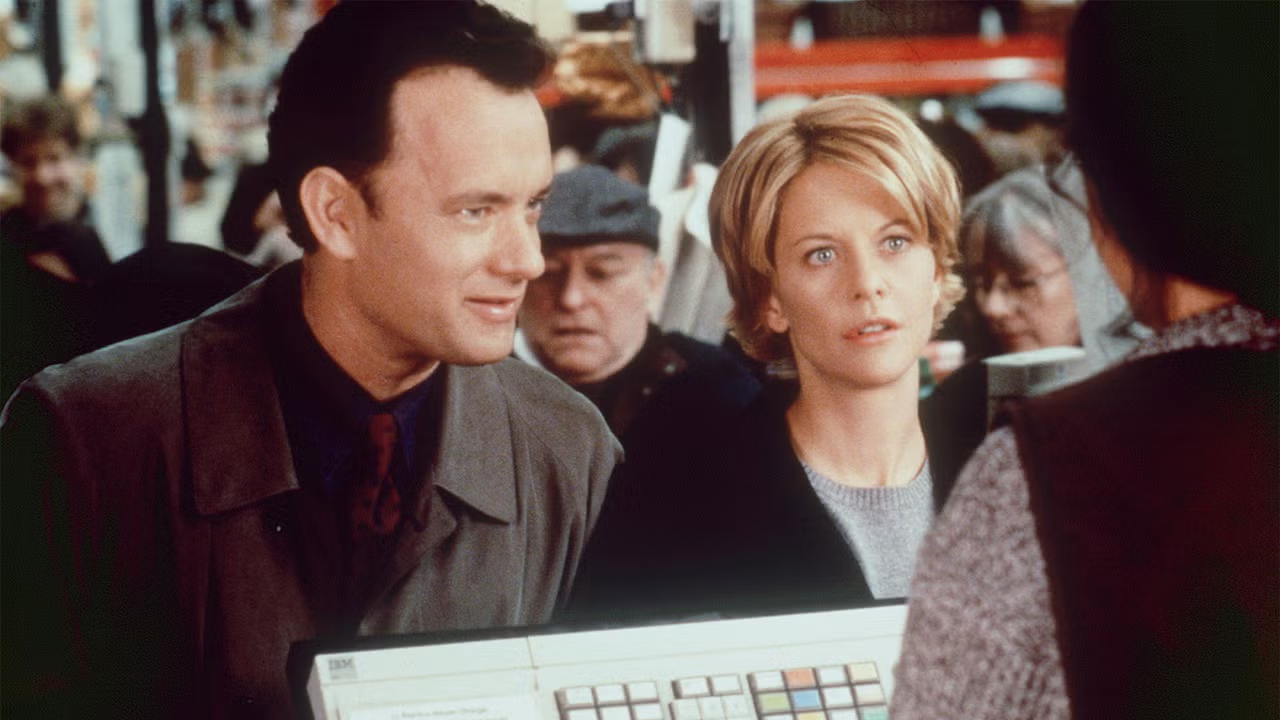
Warner Bros. is developing a remake of the 1998 romantic comedy “You’ve Got Mail,” with “Bupkis” creator Jason Orley attached to direct, according to Fast Company. However, twenty-eight years after filmmaker Nora Ephron’s original release starring Tom Hanks and Meg Ryan, the foundational technological, social, and economic conditions that anchored the story have fundamentally transformed, raising critical questions about how legacy intellectual property can be adapted when its central premise no longer exists in contemporary digital life.
For media executives and entertainment studios, the project underscores a growing structural friction between intellectual property recycling and modern audience expectations. As studios continue to mine late-20th-century catalogs to mitigate box office risk, they increasingly confront cultural shifts that render period-specific plots obsolete. Meanwhile, 2026 theatrical trends indicate that moviegoers are gravitating toward original storytelling rather than reimagined franchises stripped of their original context.
From Dial-Up Novelty to Ubiquitous Infrastructure
Released in 1998—five years after Ephron, Hanks, and Ryan collaborated on “Sleepless in Seattle”—“You’ve Got Mail” was itself an adaptation of the 1940 film “The Shop Around the Corner.” In Ephron’s version, Upper West Side independent children’s bookseller Kathleen Kelly, played by Ryan, and big-box bookstore executive Joe Fox, played by Hanks, initiate an anonymous romance inside an America Online chatroom while remaining unaware that they are bitter offline business rivals.
At the time of the original release, digital communication remained an emerging novelty rather than daily infrastructure. According to Fast Company, only 41 percent of American adults had ever logged onto the internet in 1998, and early web chatrooms carried a social stigma that made anonymous online courtship both narratively tense and culturally novel. Even the film’s title derived from the iconic AOL audio notification—a cultural touchstone largely unfamiliar to Gen Z audiences today, especially after AOL officially discontinued its dial-up internet service last year.
“What makes You’ve Got Mail uniquely un-remake-able is that technology, social norms and economics have changed so much in the last 28 years, everything about this movie now feels like a relic of the distant past.”
The Erosion of Digital and Retail Tension
The operational challenge for a contemporary remake lies in two statistical and commercial realities that have inverted since 1998: ubiquitous internet adoption and the restructuring of brick-and-mortar retail. Today, approximately 97 percent of adults under the age of 50 maintain constant internet connectivity via smartphones—a technology that was still nearly a decade away when the original film premiered. Furthermore, online dating has transitioned from a taboo curiosity into the primary avenue for modern relationships. A 2019 Stanford University study cited by Fast Company found that more than 39 percent of heterosexual couples meet online, eliminating the dramatic hesitation over meeting an internet acquaintance in person that sustained the first half of the 1998 script.
Simultaneously, the economic conflict between independent booksellers and corporate megastores no longer mirrors the late-1990s retail landscape. In 1998, national chains such as Barnes & Noble and Borders posed an existential threat to neighborhood shops through deep discounting and vast inventory. Following the rise of Amazon—which launched just three years prior to the film—Borders liquidated in 2011, and physical booksellers of all sizes found themselves competing against e-commerce dominance. In the current BookTok era, consumers visiting physical bookstores make a deliberate choice to value human curation, while Barnes & Noble has shifted toward acquiring struggling independent bookstores rather than driving them out of business.
Strategic Outlook for Studio Intellectual Property
Because plot details for Orley’s remake remain undisclosed, industry analysts note that preserving the narrative’s David-and-Goliath dynamic would likely require relocating the conflict outside the publishing sector entirely—potentially into contemporary arenas such as independent versus network podcasting or artificial intelligence startups disrupting legacy search engines. Yet altering the setting, the nature of digital anonymity, and the retail rivalry leaves little connection to the 1998 property beyond its brand name.
That branding strategy faces mounting resistance in the 2026 theatrical market. As Fast Company observes, audiences have demonstrated growing fatigue toward recognizable intellectual property detached from its original purpose, instead driving both cultural conversation and strong box office returns toward original releases such as “Obsession,” “You Can See Everything,” and “The Drama.” How Warner Bros. reconciles a 1990s dial-up premise with an always-online economy will serve as a bellwether for whether legacy romantic comedies can survive modern adaptation.
Laporan ini disusun sesuai dengan Standar Editorial The OmniWire. Pelaporan faktual primer didasarkan pada kawat rujukan resmi.