Chandra Observatory Uncovers Trigger Behind Massive Star Outbursts
Astronomers using NASA's Chandra X-ray Observatory have identified the catalyst driving recurring eruptions on volatile giant star AT 2016blu in NGC 4559.
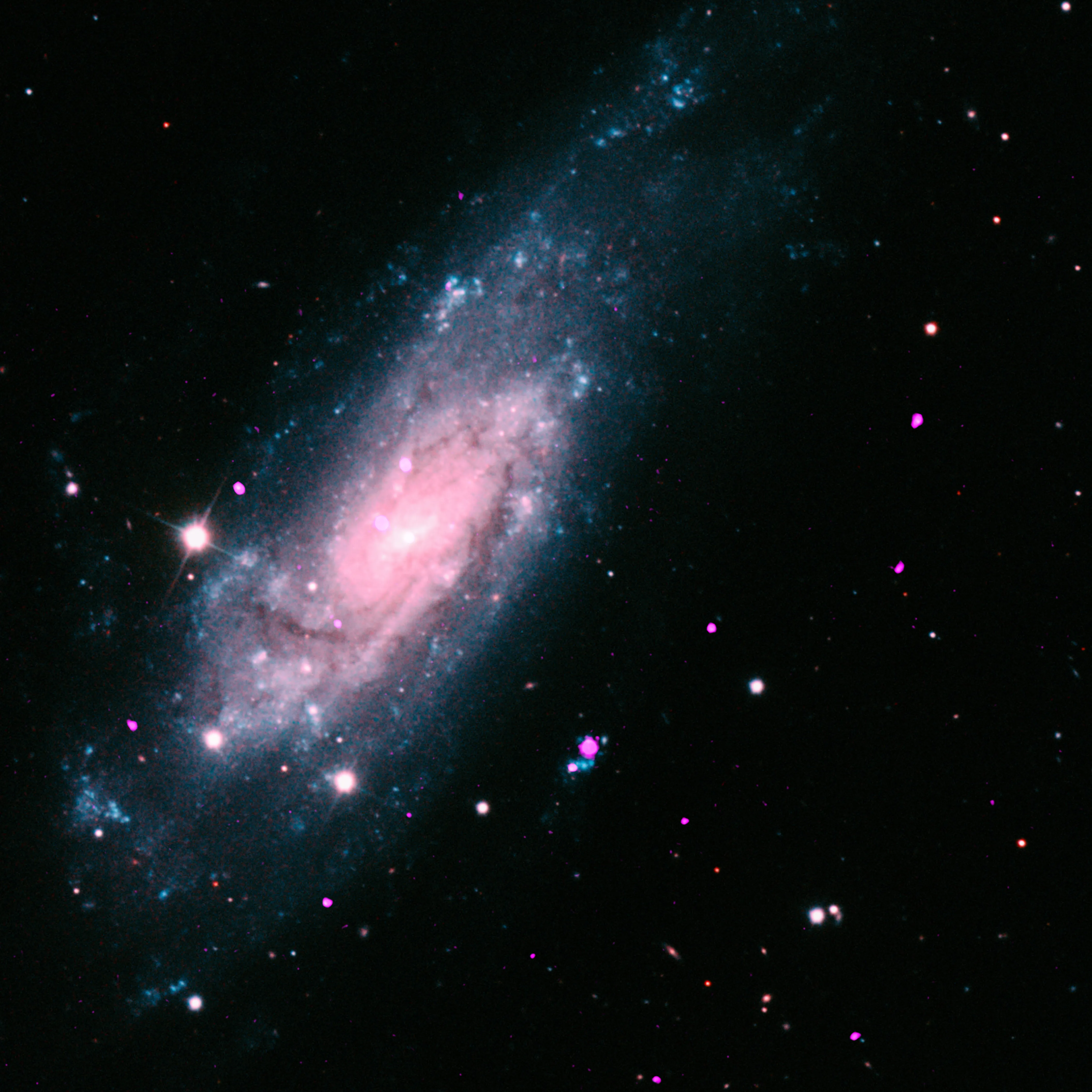
Astronomers utilizing NASA’s Chandra X-ray Observatory have identified the underlying mechanism triggering repeated outbursts from a giant, unstable star located approximately 30 million light-years from Earth, according to a NASA release published Nov. 9, 2026. The volatile stellar object, designated AT 2016blu, resides within the spiral galaxy NGC 4559 and has drawn sustained scientific scrutiny due to its recurring, high-energy eruptions. By capturing high-resolution X-ray emissions from the system, researchers have isolated the physical drivers governing these periodic instabilities, advancing observational models of how massive stars behave during the volatile late stages of their evolutionary lifecycles.
The findings carry broad significance for space agencies, astro-engineering initiatives, and the commercial space instrumentation sector. High-energy X-ray astrophysics serves as a primary proving ground for next-generation detector arrays, space-based optics, and autonomous telemetry processing systems. Understanding the mechanics of recurring stellar transients like AT 2016blu refines theoretical models of extreme plasma physics and radiation transport. Furthermore, demonstrating the continued diagnostic precision of flagship space observatories reinforces the strategic rationale for sustained capital allocation toward deep-space sensing infrastructure and multi-wavelength astronomical survey platforms.
Observational Context within Spiral Galaxy NGC 4559
AT 2016blu is situated in NGC 4559, a well-studied spiral galaxy located roughly 30 million light-years from Earth. Unlike standard supernovae, which represent a single terminal detonation that destroys the progenitor star, AT 2016blu belongs to a class of massive, unstable stellar systems capable of surviving multiple violent mass-ejection events. These recurring outbursts periodically brighten the star and expel substantial quantities of circumstellar material into the surrounding interstellar medium, creating complex shock fronts that radiate across the electromagnetic spectrum.
Using NASA’s Chandra X-ray Observatory, astronomers have discovered what is triggering repeated outbursts from a giant, unstable star located in the galaxy NGC 4559.
Optical surveys initially flagged AT 2016blu for its irregular variability, but optical wavelengths alone could not penetrate the dense shrouds of gas and dust expelled during previous eruptions to reveal the core trigger mechanism. NASA’s Chandra X-ray Observatory provided the necessary spectral resolution and sensitivity to probe the high-temperature regions directly associated with the stellar shockwaves and gravitational interactions driving the instability.
Technical Impact and High-Energy Diagnostics
The investigation of AT 2016blu underscores the operational necessity of space-based X-ray telescopes capable of resolving point sources at extragalactic distances of 30 million light-years. Because Earth's atmosphere absorbs incoming cosmic X-rays, orbital platforms like Chandra are essential for detecting the high-energy photons generated when stellar ejecta collide with surrounding gas or when compact companion objects interact with a massive star's outer envelope.
Analyzing transient outbursts at this distance requires precise photon-counting detectors and high-angular-resolution grazing-incidence mirrors. Data derived from these observations enable astrophysicists to measure plasma temperatures, column densities, and shock velocities with high fidelity. From an operational standpoint, the ability to correlate archival optical transient alerts with targeted X-ray follow-up campaigns demonstrates the efficacy of integrated, multi-observatory data pipelines. These workflows rely on automated classification algorithms and rapid-response scheduling protocols to capture ephemeral astronomical phenomena before their radiative signatures fade below detection thresholds.
Strategic Outlook for Extragalactic Transient Monitoring
Looking ahead, the characterization of AT 2016blu establishes an empirical benchmark for monitoring similar unstable massive stars across nearby galactic neighborhoods. As wide-field optical and infrared time-domain surveys expand their cadence and sky coverage over the coming decade, the volume of detected stellar transients is projected to increase by orders of magnitude. Filtering and characterizing these events will require tight coordination between wide-field survey telescopes and specialized high-energy observatories.
For scientific policymakers and aerospace contractors, the ongoing productivity of the Chandra X-ray Observatory highlights the long-term return on investment provided by durable orbital assets. Future milestones in the study of NGC 4559 and AT 2016blu will focus on predicting subsequent outburst cycles, refining mass-loss rate estimates for evolved giant stars, and integrating X-ray spectral datasets into next-generation computational hydrodynamics models.
Laporan ini disusun sesuai dengan Standar Editorial The OmniWire. Pelaporan faktual primer didasarkan pada kawat rujukan resmi.