US Air Force Thunderbirds Anchor NASA MAX POWER Expo at Kennedy
NASA's MAX POWER aerospace festival at Kennedy Space Center highlights military-civilian aviation heritage and the future of flight operations.
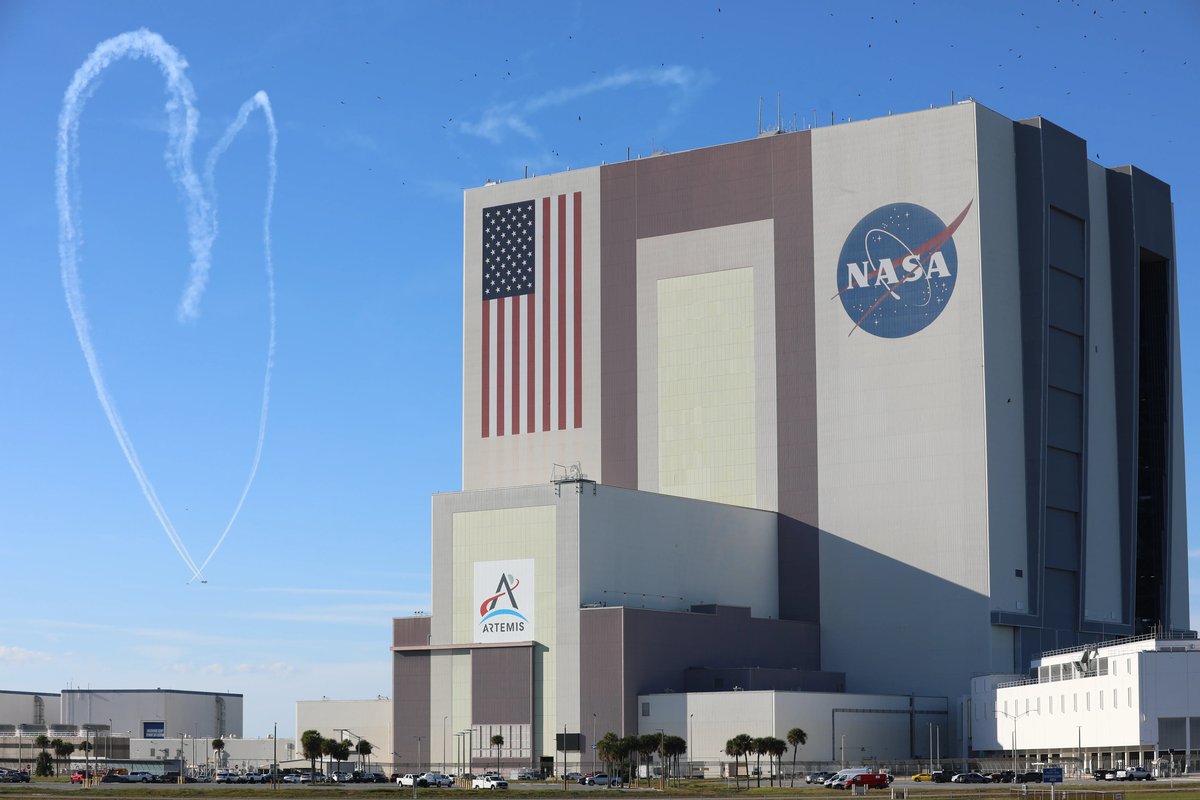
The U.S. Air Force Thunderbirds executed precision aerial maneuvers over NASA's Kennedy Space Center in Florida on Sunday, Nov. 8, 2026, forming a signature heart-shaped smoke trail near the spaceport's iconic Vehicle Assembly Building during the agency's MAX POWER aerospace exposition and air show, according to NASA News Releases. The high-profile demonstration served as a visual centerpiece for an event explicitly structured by the space agency to link historical aeronautical milestones with active spaceport operations and next-generation flight technologies.
For the broader aerospace, defense, and commercial space sectors, public-facing expositions hosted directly on active orbital launch ranges carry strategic significance beyond ceremonial outreach. By opening operational corridors around Kennedy Space Center for large-scale military and civilian flight demonstrations, NASA reinforces institutional alignment between Department of Defense aviation assets, federal space infrastructure, and the commercial aerospace workforce concentrated along Florida's Space Coast. Events of this scale test airspace coordination protocols, security logistics, and public engagement frameworks at a time when launch cadence and multi-user spaceport demand are reaching historical highs.
Bridging Atmospheric Aviation and Orbital Infrastructure
According to NASA's official documentation of the event, the MAX POWER expo and air show was organized as an aerospace festival celebrating the past, present, and future of flight. Staging the U.S. Air Force's premier jet demonstration squadron directly adjacent to the Vehicle Assembly Building underscored the historical and operational continuity between supersonic atmospheric flight testing and heavy-lift orbital launch programs. Throughout the history of American aerospace development, pilot proficiency, flight control instrumentation, and propulsion research have flowed continuously between military aviation branches and civilian spaceflight centers.
The Vehicle Assembly Building, one of the largest single-story structures in the world by volume, has long served as the physical anchor of human spaceflight preparation at Kennedy Space Center. Conducting complex, close-formation aerobatic maneuvers such as the heart-shaped smoke trail within visual proximity of this critical processing facility required tight range safety coordination and precise airspace deconfliction across Cape Canaveral's restricted flight zones. Rather than isolating launch processing facilities from public view, the festival model integrates active spaceport architecture into the narrative of national aerospace capability.
Operational Significance and Workforce Ecosystem Impact
While NASA's release focused on the visual execution of the Sunday flight display, the operational backdrop of hosting an integrated air show at a premier federal launch complex reflects broader shifts in how spaceports manage multi-modal flight operations. Modern aerospace hubs must increasingly accommodate diverse flight profiles—ranging from high-performance military jet formations and experimental atmospheric testbeds to orbital launch vehicles and commercial spacecraft processing—within shared geographic and regulatory boundaries.
Furthermore, major aerospace festivals at flagship centers play a measurable role in regional economic vitality and technical workforce recruitment. The convergence of legacy military demonstration teams like the Thunderbirds with NASA's forward-looking research programs provides a tangible touchpoint for aerospace contractors, engineering institutions, and prospective technical talent. Sustaining public and institutional momentum around both aeronautical research and space exploration remains essential as federal agencies compete with private technology sectors for specialized avionics, propulsion, and systems engineering personnel.
Outlook for Integrated Spaceport Engagement and Flight Programs
Looking ahead, the execution of the MAX POWER expo establishes a benchmark for how federal space installations can balance stringent facility security and active launch schedules with large-scale public and interagency demonstrations. As NASA and its defense and commercial partners advance toward higher-frequency flight operations, maintaining flexible airspace management around the Florida spaceport will remain a core operational priority. Initiatives that showcase the full spectrum of flight—from high-speed atmospheric maneuvering to deep-space launch preparation—will continue to shape public policy support and industrial collaboration across the United States aerospace enterprise.
Dieser Bericht wurde in Übereinstimmung mit den redaktionellen Standards von The OmniWire erstellt. Die primäre Berichterstattung stützt sich auf verifizierte Agenturmeldungen.