Apple TV Launches Sign Language Feature Alongside Being Heumann
Apple introduces on-screen ASL and BSL interpretation for streaming content, expanding digital accessibility beyond standard text captions.
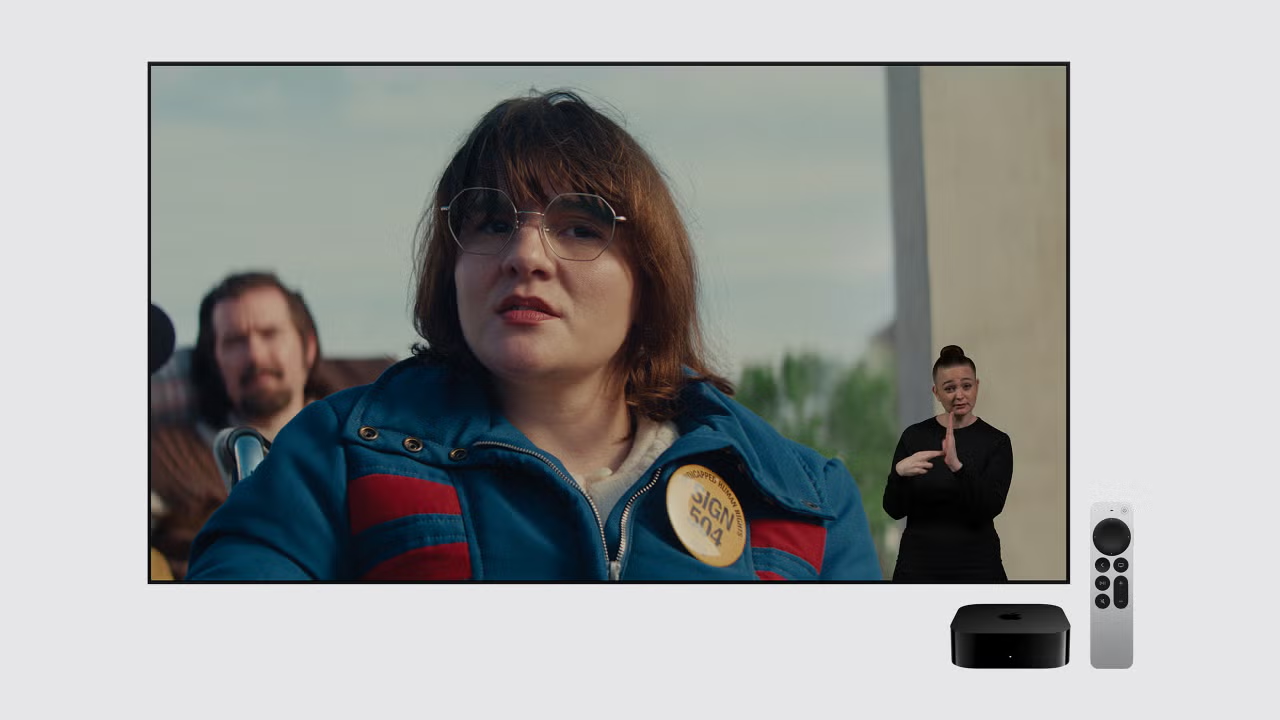
Apple rolled out a dedicated on-screen sign language interpretation feature for Apple TV on Friday, timing the deployment with the streaming premiere of the biographical drama Being Heumann, according to a report by Fast Company. Designed in direct collaboration with native signers, the new functionality places a visual feed of a sign language interpreter directly on the screen to serve viewers using American Sign Language (ASL) and British Sign Language (BSL). Rather than replacing conventional text captions, the feature operates as a complementary accessibility layer intended to convey emotional nuance, conversational timing, and tonal depth across digital entertainment.
For the broader technology and digital media sectors, the launch signals a structural shift from compliance-oriented text subtitling toward native linguistic accommodation in streaming architectures. While closed captioning has long served as the baseline standard for video accessibility, text overlays frequently strip away vocal inflection and narrative pacing. By integrating studio-produced sign language tracks directly into its streaming interface, Apple establishes a higher technical and creative benchmark for inclusive media consumption, challenging competing platforms to invest in richer, multi-modal accessibility frameworks.
Bridging the Linguistic Gap Beyond Text Captions
Members of the Deaf community have long noted that standard captions frequently fall short of delivering a complete viewing experience. According to Fast Company, traditional text overlays often lack adequate descriptions of mood and tone, while synchronization errors or poorly timed captions can disrupt the narrative flow of an entire episode or film. Furthermore, imprecise text translations can alter the underlying meaning of on-screen dialogue for viewers whose primary language is ASL or BSL rather than written English.
To address these limitations, Apple produced each interpretation track by pairing a specialized interpreter with a director of artistic sign language (DASL). Working together inside a dedicated studio environment, these teams crafted high-quality sign language performances specifically tailored to mirror the emotional intensity and dramatic pacing of the source material. The feature builds upon Apple Originals' existing global accessibility portfolio, which already encompasses Subtitles for the Deaf and Hard of Hearing (SDH) as well as Audio Description tracks for blind and low-vision audiences across multiple languages.
The debut of the interpretation feature coincides with the streaming release of Being Heumann, a 2026 biographical drama directed by Sian Heder. Adapted from the memoir Being Heumann: An Unrepentant Memoir of a Disability Rights Activist, co-written by disability rights pioneer Judith Heumann and Kristen Joiner, the film stars Ruth Madeley as Heumann alongside Mark Ruffalo and Dylan O’Brien. Following a limited theatrical run that began on November 6, the film arrived on Apple TV on Friday with integrated sign language support.
“I’m proud to have been part of Being Heumann and thrilled to see Apple TV supporting greater accessibility for Deaf audiences.”
That assessment came from Daniel Durant, who both acts in Being Heumann and served as the director of the film's sign language interpretation, as quoted by Fast Company.
Data Deficits and Operational Production Standards
The investment in studio-grade sign language tracks occurs against a backdrop of persistent demographic undercounting that has historically obscured the scale of demand for sign language services. As highlighted in a 2021 U.S. Census Bureau presentation cited by Fast Company, traditional household language surveys face significant methodological difficulties in capturing accurate statistics on ASL users. Because national data sets routinely undercount the Deaf community, media companies and enterprise software providers have often struggled to accurately quantify and prioritize sign language accessibility needs.
Operationally, Apple's approach moves sign language interpretation out of post-hoc, picture-in-picture broadcast overlays and into a standardized studio production workflow. Requiring both an interpreter and a director of artistic sign language for each title introduces new creative roles and quality control standards into the post-production pipeline. By treating artistic sign language direction with the same rigor applied to voice dubbing or audio mixing, the workflow ensures that visual translations preserve the director's original dramatic intent.
Strategic Outlook for Accessible Digital Media
Looking ahead, the introduction of dual ASL and BSL interpretation tracks on a major global streaming service sets a precedent that could reshape industry expectations for digital life and entertainment accessibility. As consumers and advocacy groups evaluate streaming platforms on the depth of their inclusive design, the availability of native sign language tracks may transition from a specialized differentiator into a standard catalog requirement for high-profile releases.
Key questions moving forward will center on how rapidly studio-directed sign language production can scale across broader content libraries and live programming. While studio coordination between DASL specialists and interpreters requires dedicated production lead times, establishing this infrastructure positions Apple to expand native sign language coverage across future Apple Originals, encouraging wider adoption of expressive, non-textual accessibility tools across the global streaming ecosystem.
Dieser Bericht wurde in Übereinstimmung mit den redaktionellen Standards von The OmniWire erstellt. Die primäre Berichterstattung stützt sich auf verifizierte Agenturmeldungen.